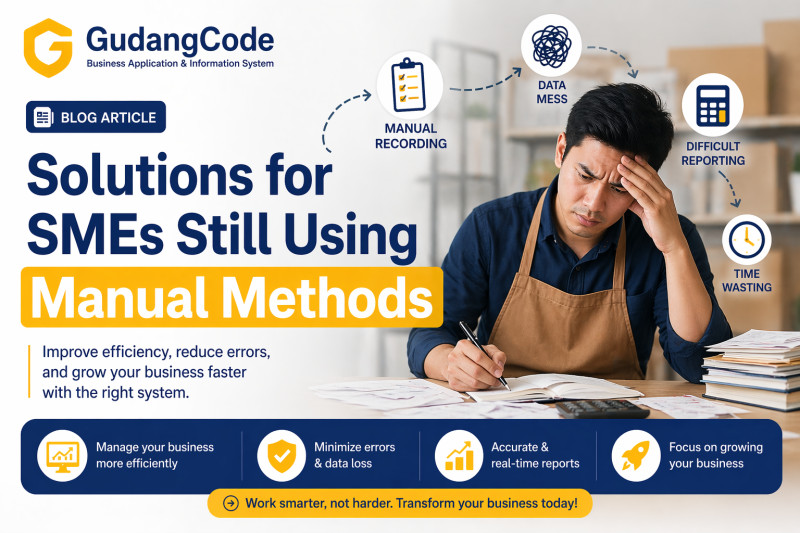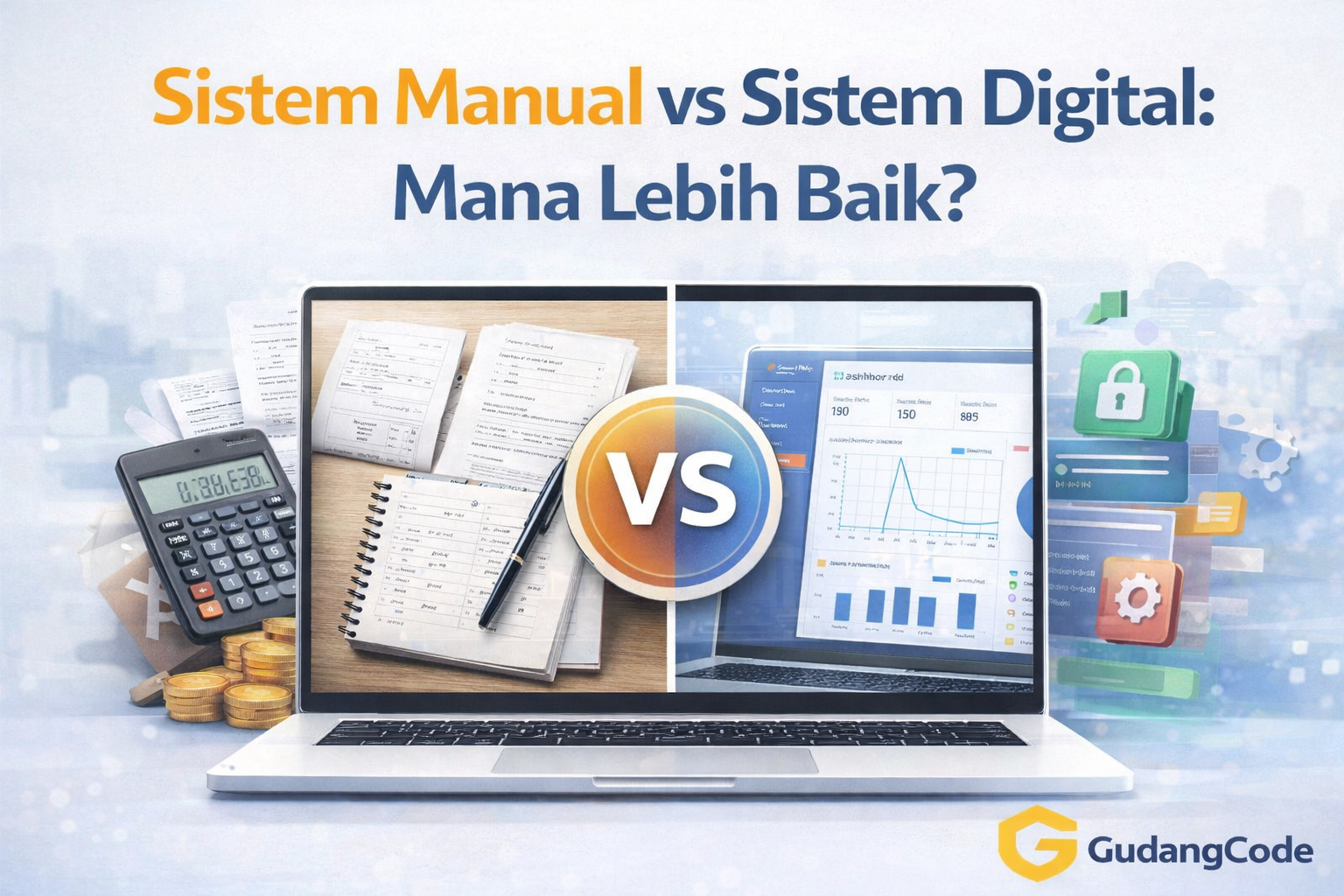
In running a business, many business owners still rely on manual systems such as handwritten records or simple spreadsheets. While this approach is easy to use, it often becomes inefficient as the business grows.
On the other hand, digital systems are becoming the preferred solution because they improve efficiency, accuracy, and operational speed.
So, which one is better: manual systems or digital systems? Here is a complete comparison.
What Is a Manual System?
A manual system refers to managing business processes without specialized software, typically using notebooks or simple spreadsheet tools.
- Uses paper or basic Excel files
- Does not require advanced technology
- Easy for beginners to use
What Is a Digital System?
A digital system uses applications or software to manage business processes automatically and in an integrated way.
- Uses software or information systems
- Data is stored in a structured format
- Processes are faster and more accurate
Manual vs Digital System Comparison
1. Speed
Manual System: Slower because tasks are done manually.
Digital System: Faster due to automation.
2. Data Accuracy
Manual System: Prone to human errors.
Digital System: More accurate with reduced error rates.
3. Efficiency
Manual System: Requires more time and effort.
Digital System: More efficient in daily operations.
4. Data Storage
Manual System: Data can be lost or damaged easily.
Digital System: Data is securely stored and easily accessible.
5. Scalability
Manual System: Difficult to scale as the business grows.
Digital System: Easily scalable according to business needs.
When Should You Use a Manual System?
- When the business is still in an early stage
- When transactions are minimal
- When not ready to adopt technology
When Should You Switch to a Digital System?
- When transactions increase
- When data becomes difficult to manage manually
- When fast and accurate reporting is needed
Benefits of Digital Systems in the Long Term
In the long run, digital systems provide several advantages, including:
- Saving operational time
- Reducing human errors
- Providing real-time reports
- Supporting data-driven decision making
Practical Solution to Get Started
If you want to transition to a digital system easily, there are ready-to-use business applications available that can be implemented quickly.
Platforms like GudangCode provide various information systems suitable for business needs.
Start your digital transformation here:
Conclusion
Both manual and digital systems have their own advantages. However, for growing businesses, digital systems offer better efficiency, accuracy, and scalability.
Start transitioning gradually to ensure your business stays competitive and grows faster in the digital era.